
Sm7 trains are nearly ready—here is what passengers can expect
The first Sm7 trains are approaching service on D, R, T, Z and M routes. See their accessible design, passenger facilities and what still needs confirmation.
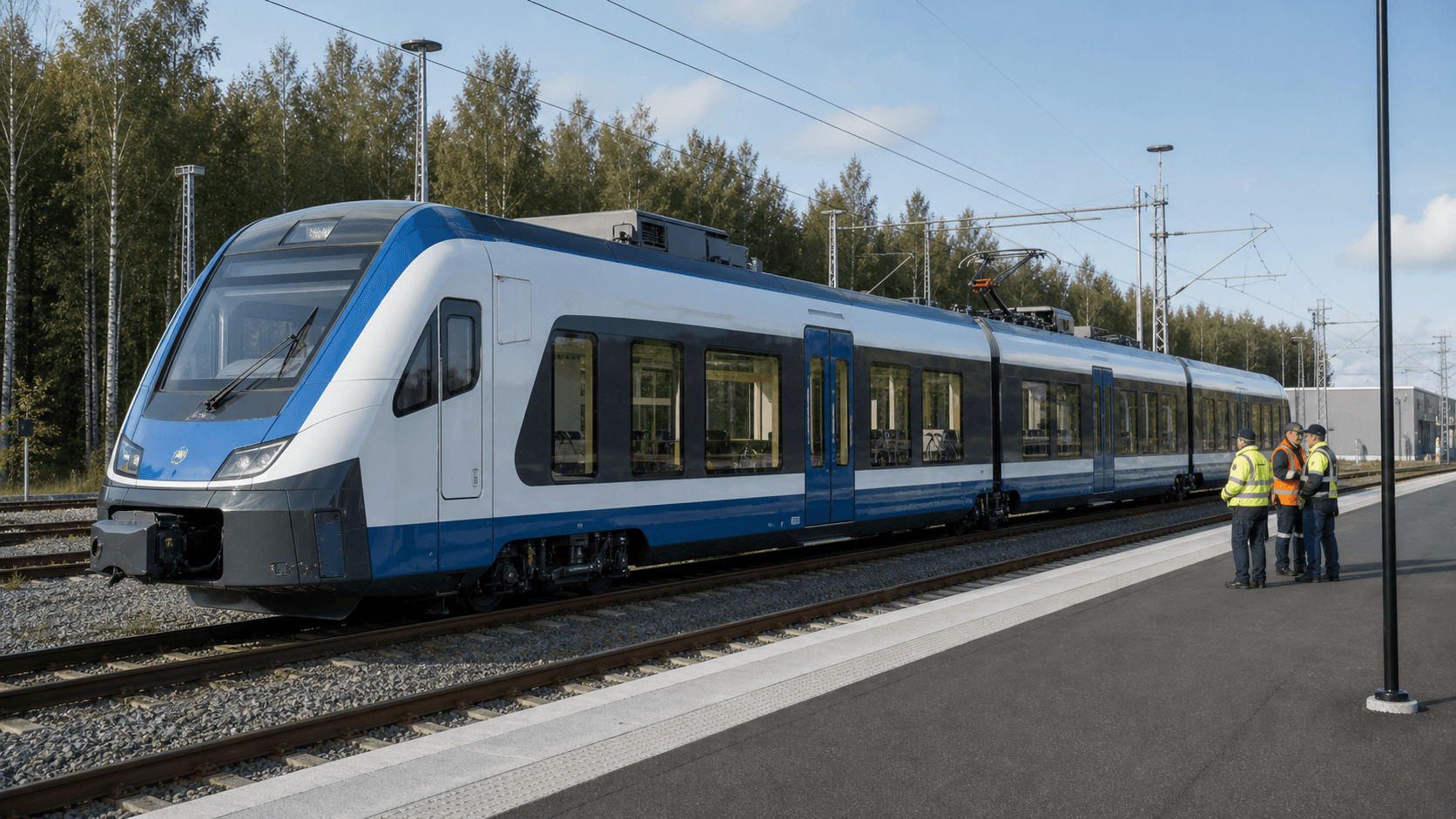
A new train is close, but not yet a promise for tomorrow
Finland's first Sm7 regional trains are nearing passenger service. They are intended for the D, R, T, Z and M routes, where they will gradually change the everyday experience of travel between Helsinki and surrounding regions.
The careful word is nearing. The trains have been tested, but public service still depends on the required authorisation and an operational launch decision. Until those are confirmed for a specific date, passengers should not plan a journey around seeing an Sm7.
The most important improvement is the floor
The Sm7 is fully low-floor. That changes more than boarding speed: it reduces the vertical step for wheelchair users, passengers with prams, older travellers, cyclists and anyone carrying a heavy bag. Two toilets are planned on each train, including one accessible toilet.
Accessibility still depends on the station, the gap between platform and train and working equipment. A low-floor vehicle cannot repair every older platform, but it removes one major barrier inside the train design itself.
Built for ordinary regional journeys
The passenger facilities include Wi-Fi, power sockets, USB charging and tables designed for working. The layout also needs to carry the mixed reality of regional travel: commuters, families, bicycles, luggage and journeys that are longer than a short city hop.
Five trains are expected in the first operational group, followed by roughly one additional train each month. That means the fleet will appear gradually. Old and new trains will run side by side for a long time, so the facilities on a particular departure may differ.
What the new fleet replaces
The plan is for Sm7 trains to replace Sm4 units on regional routes. Sm4 trains can then take over duties from older Sm2 units. This is a fleet cascade: one new train can improve service in more than one place because existing vehicles move to other work instead of disappearing immediately.
The first order covers 20 trains and is worth about €250 million. The agreement includes an option for up to 50 more, but an option is not the same as a completed order. Future fleet size depends on later decisions.
Why ownership matters too
The Sm7 trains are owned by the state-owned rolling-stock company RailStock rather than being tied permanently to one operator. That structure is intended to make the trains available for future competitively tendered passenger services. It does not change the ticket or timetable today, but it affects how Finland can organise regional rail after the current operating agreement.
What to watch next
Three events matter: final authorisation, the confirmed first passenger departure and the pace at which more units enter service. Until then, the honest summary is that Sm7 is a tested and visible near-future train, not yet a guaranteed train on any individual journey.
Sources and last checked
Passenger facilities, rollout plans and the remaining authorisation step are described by Yle's Svenska Yle report. Routes and the planned 2026 introduction are also presented on VR's renewal page. Information was checked on 13 August 2026; no specific commercial launch date is asserted here.