
SkySkyft and the Finnish idea of deeper flight search
A retrospective on SkySkyft, its 2019 deep-search comparisons and the enduring lessons for comparing flight prices and complete journeys.
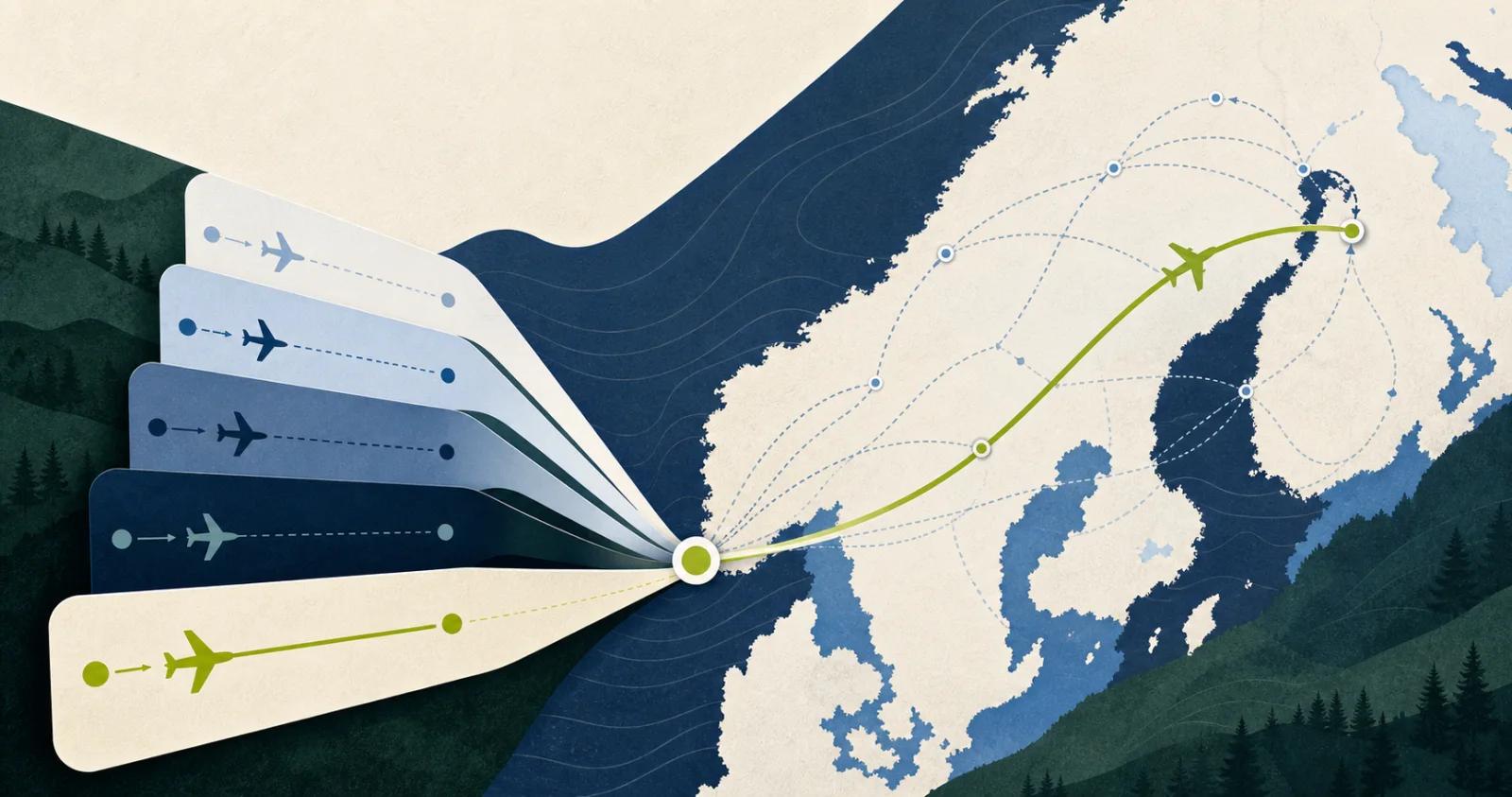
A flight-search experiment from Finland
In March 2019, SkySkyft—previously presented as SkyScrambler—was documented as a flight-search experiment built around a simple question: what if a search looked beyond the first fare shown? Its proposition combined a deeper price search, a cookie-free approach and a carbon-footprint calculator. The original account also described collaboration across Finland, Berlin, London and Warsaw.
This article is a retrospective. The historical screenshots below record how the product was presented in 2019; they do not show current fares, current availability or a service recommendation. The SkySkyft domain was not resolving when checked on 9 August 2026, while the Internet Archive preserves the 2019 website.
What “deep search” was trying to solve
A quick flight search can return a useful starting point without exposing every source, currency, fare condition or itinerary variation. SkySkyft called its alternative “Deep Search”: a wider comparison intended to keep looking after a fast result had already appeared.
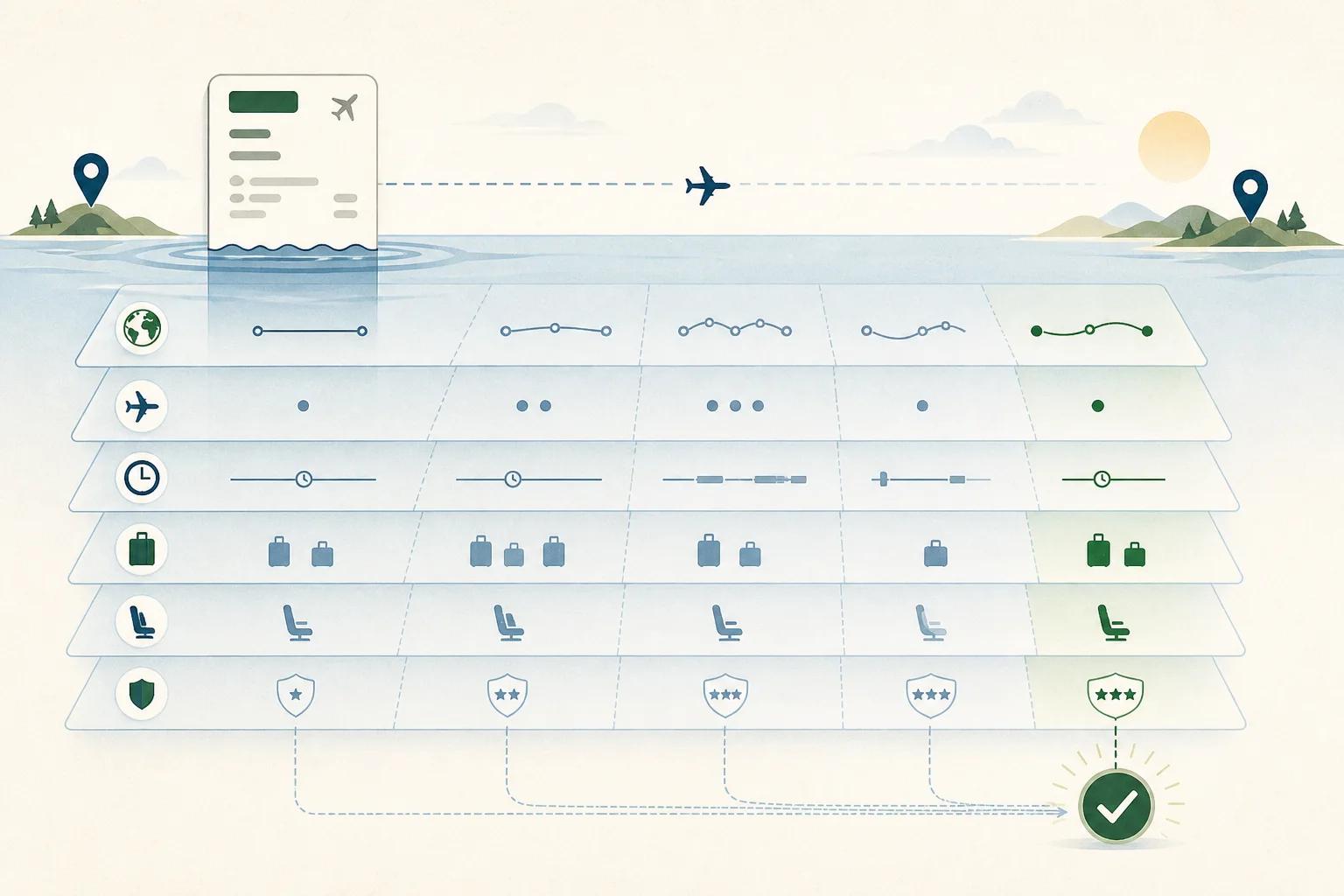
That distinction still matters. A flight result is useful only when the traveller can understand what is being compared: the exact dates, airports, number of passengers, route, stops, currency and provider. A smaller number is not automatically the better journey.
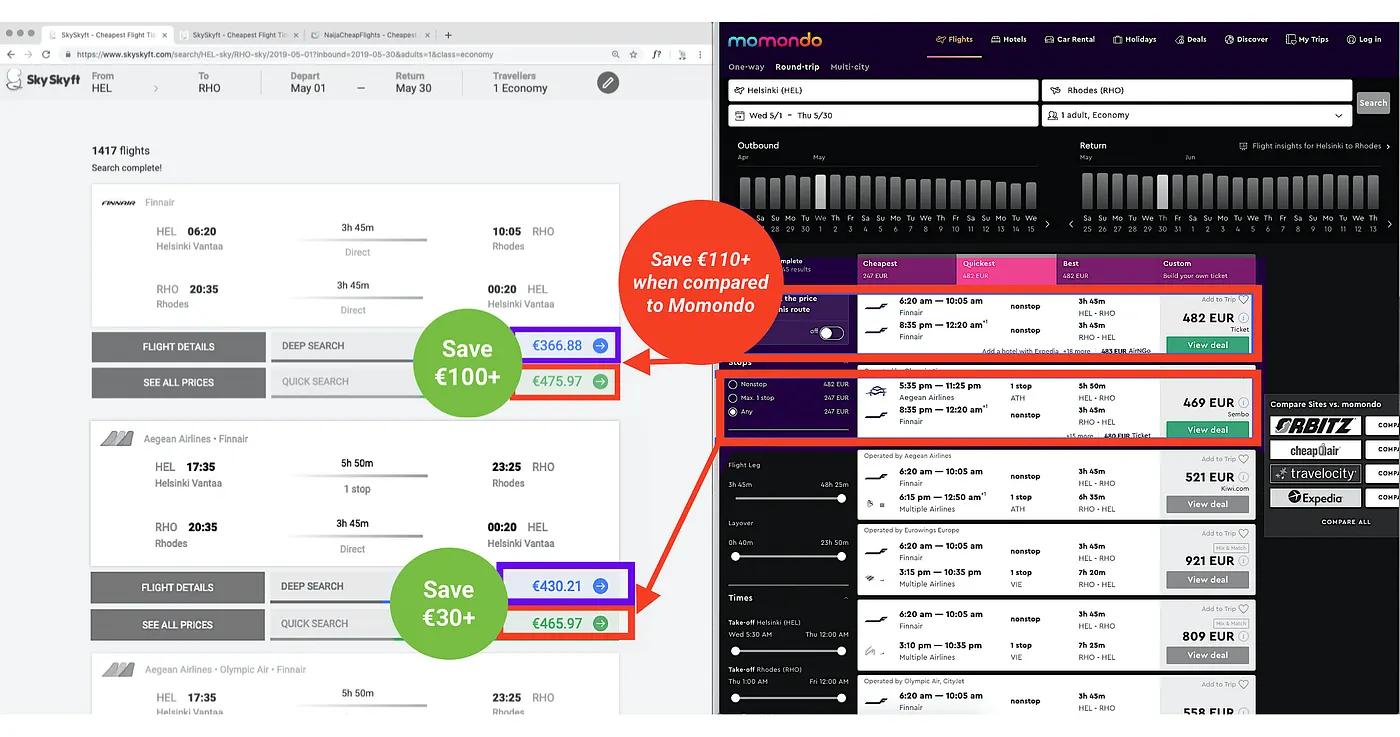
Four historical comparison snapshots
The first 2019 example placed a SkySkyft result beside Momondo for the same Helsinki–Rhodes search. The original image claimed a saving of more than €100 in one comparison and more than €30 in another. Those amounts belong to that captured search only; they are not evidence of a repeatable saving today.
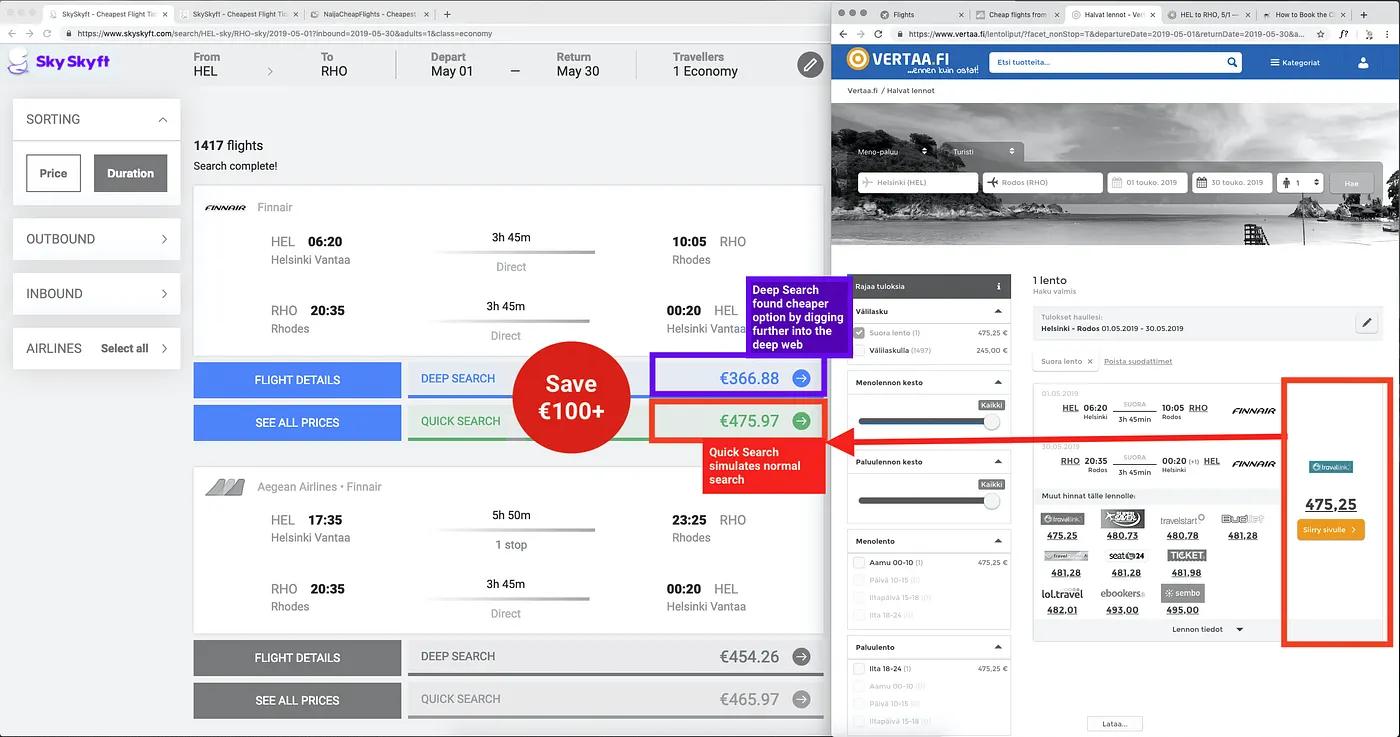
A second image compared a SkySkyft Deep Search result with a quick search on Vertaa. It illustrates the product thesis clearly: the first result and the result after a broader search were not necessarily the same. It does not establish which data sources, fees or fare rules were included in each service.
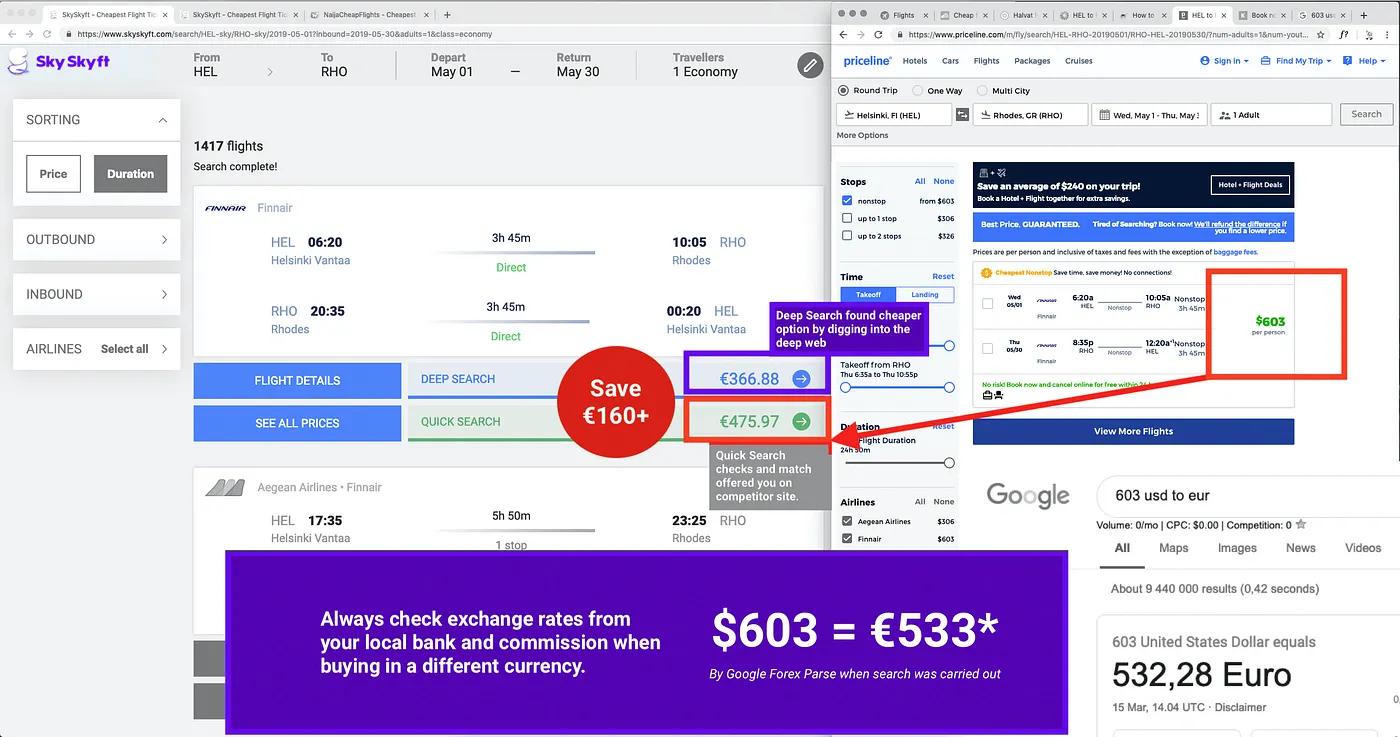
A third comparison used Priceline and included a warning about exchange rates. That is an enduring lesson. When services display different currencies or convert them at different times, an apparent saving can shrink or disappear at payment. Always compare the final currency and amount on the booking page.
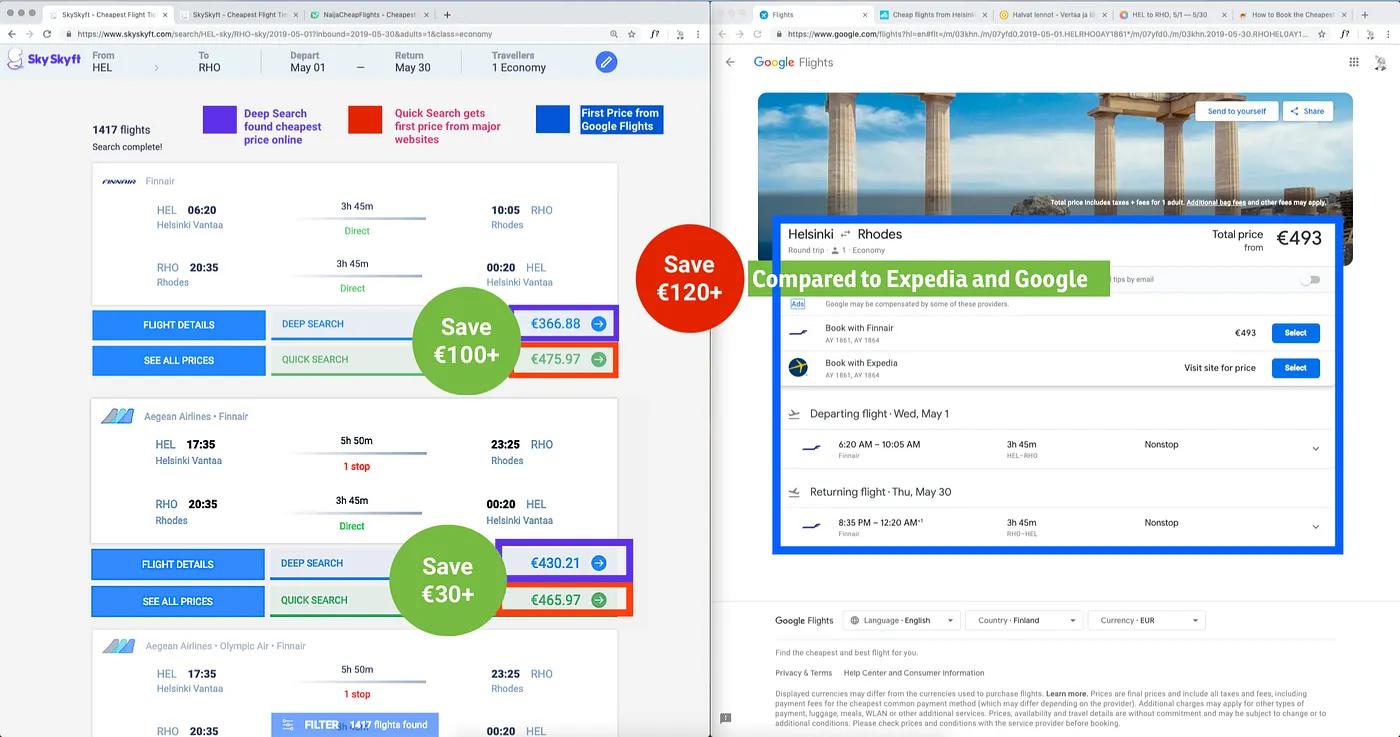
The fourth image compared the same route with Google Flights and Expedia. Again, its value today is historical rather than commercial: it records the product’s argument that checking more than one source could reveal a different fare. It does not verify present-day prices or coverage.
What travellers can still learn from it
First, compare like with like. Use the same airports, dates, passenger count and cabin. Check whether the amount covers one leg or the complete return journey.
Second, examine the itinerary behind the price. Stops, self-transfers, overnight waits, airport changes and total duration can make a cheap result expensive in time or risk.
Third, verify what the fare includes. Cabin baggage, checked baggage, seat selection, payment fees and change rights can alter the real cost. The provider and operating airline remain the final authorities before purchase.
Fourth, treat a comparison result as time-sensitive. Availability, exchange rates and fare classes change. Record what you selected, then confirm the final total and conditions on the provider’s checkout page.
Applying the lesson now
Junat’s flight search is a current place to begin comparing itineraries from Finland. It is not the former SkySkyft product and it does not claim the same search algorithm. The continuity is the useful principle: expose enough journey context for a person to make a better-informed choice, then send that person to the provider to verify and book.
For a practical checklist, continue with how to compare flights from Finland. After booking, use Finnish airport departure and arrival boards for operational updates and the airline for check-in, gates and booking changes.
Sources and evidence boundary
The historical product description and comparison images come from the author’s original 2019 SkySkyft article. An archived version of the service is available through the Internet Archive. Prices and savings shown in the screenshots are preserved examples, not current tests or guaranteed outcomes.